




How to Fall Back Asleep in the Middle of the Night
A gentle, step by step plan for 3 a.m. wake ups: what to do in the first minute, which breath to use, when to get up, and when to talk to a doctor.

You wake. The room is dark and very quiet. Before you have decided anything, your hand is reaching for the phone to check the time, and your mind has already done the sum: if I fall asleep right now, I get three hours and forty minutes.
That sum is the real enemy of the 3 a.m. wake up. Waking itself is ordinary; most of us surface briefly between stretches of sleep and simply do not remember. What turns a short waking into an hour awake is what we do in the first two minutes: the clock, the light, the mental arithmetic, the worry about tomorrow.
This guide is a plan for those two minutes and the twenty after them. It draws on NHS insomnia advice and the medically reviewed guidance of the Sleep Foundation, and on what we built for exactly this moment in CalmDepth: Back to sleep.
The plan at a glance
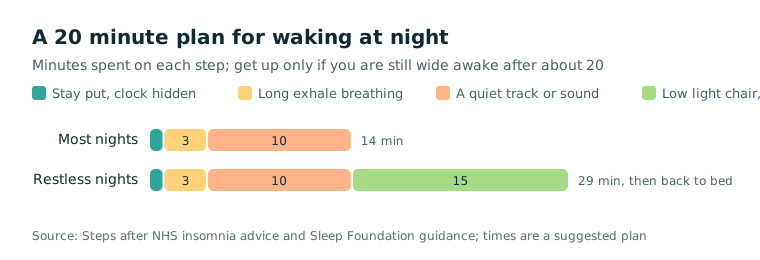
| Step | Most nights | Restless nights |
|---|---|---|
| Stay put, keep the clock hidden | 1 min | 1 min |
| Long exhale breathing | 3 min | 3 min |
| A quiet track or steady sound | 10 min | 10 min |
| Low light chair, then back to bed | none | about 15 min |
| Total | about 14 min | about 29 min |
The times are a suggested plan, not a rule. The one firm number comes from sleep experts: if you are still wide awake after about 20 minutes, get up for a while.
Step 1: Do not check the time
The Sleep Foundation notes that clock watching can make falling asleep harder, because it adds frustration and stress. Knowing it is 3:12 changes nothing you can act on, and it starts the countdown. Turn the clock to the wall before bed, and keep the phone face down. If you use your phone for a sleep track, set it up the evening before so you can start it without looking at the screen for long.
Step 2: Keep the lights off
Light tells the brain it is morning. The Sleep Foundation explains that light exposure stops the production of melatonin, the hormone that promotes sleep. If you must get up for the bathroom, use the dimmest light that keeps you safe, and keep your eyes soft.
Step 3: Lengthen your out breath
A longer exhale is one of the quickest ways to tell your body there is nothing to do. Try one of these, lying exactly as you are:
| Breath | How | Good when |
|---|---|---|
| Calm breath | In for 4, out for 6, for about 3 minutes | You feel alert but not anxious |
| 4-7-8 breath | In for 4, hold for 7, out for 8, four rounds | You want something to count |
| NHS calm breath | In for 5, out for 5, for at least 5 minutes | Holds feel uncomfortable |
Never force the breath; if counting makes you more alert, drop the numbers and simply let each exhale be a little slower than the inhale. Our full guide to 4-7-8 breathing explains the technique step by step.
Step 4: Give your mind somewhere quiet to rest
The waking mind wants a job. Give it a small, dull one:
- A quiet track made for the night. Not a 45 minute bedtime story, which assumes you are starting the evening, but something short and low, with no greeting. That is what Back to sleep is.
- A steady sound. Rain, a fan, brown noise, softly. If you fell asleep to a sound, play the same one; the familiarity is the point. See our sleep sounds guide.
- A body scan. Move your attention slowly from your toes upwards, noticing warmth and weight.
- The alphabet game. Pick a calm category (trees, rivers, soups) and find one for each letter. You rarely reach M.
Back to sleep in CalmDepth
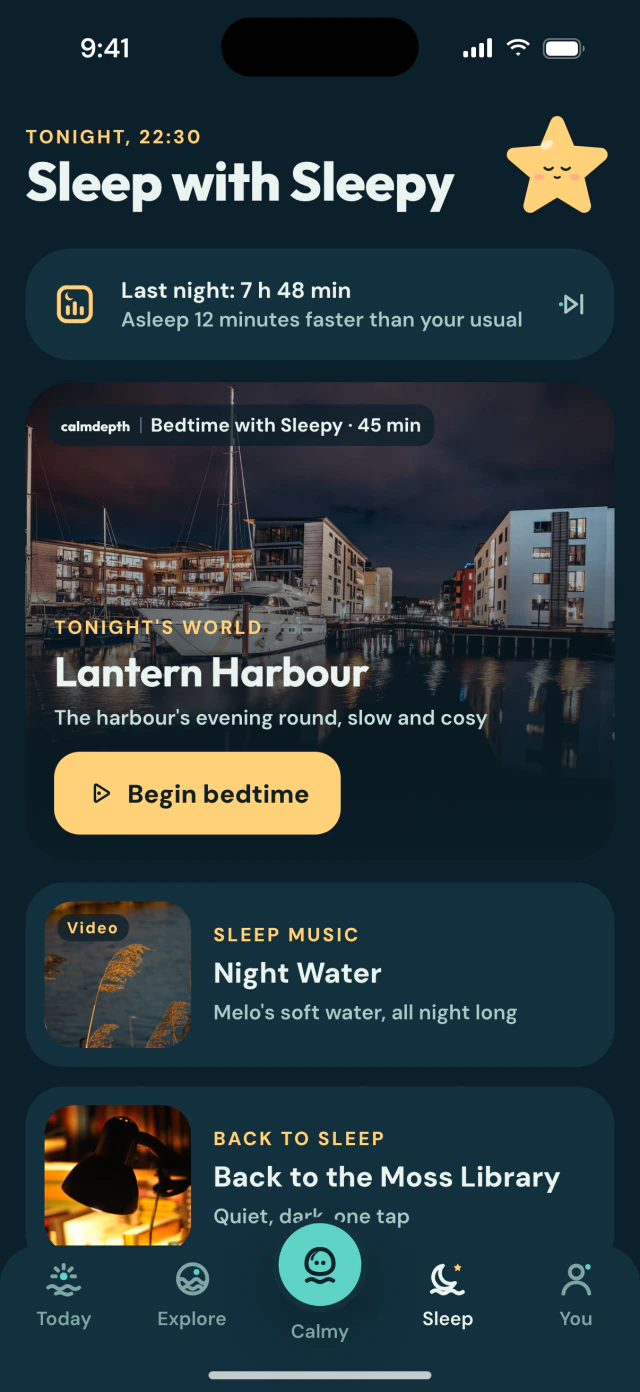
We wrote 21 Back to sleep tracks, each a twin of a Bedtime with Sleepy world, so you return to a place you already know. Our English recordings run from 7.5 to 11.4 minutes, with a median of about 9. They follow strict rules:
- No greeting. No "welcome back", nothing that asks you to be awake.
- A low start. The voice begins softly so it does not jolt you.
- A long exhale, early. Breathing slows before the story starts.
- Short, repeated images. "Ten quiet minutes in the armchair, with rain on the glass."
- One tap. On the Sleep tab, Back to sleep sits one tap away from tonight's world.
Four Back to sleep tracks are part of CalmDepth's free tier; all 21 come with premium.
Step 5: If you are still awake after about 20 minutes, get up
This sounds backwards, but it is one of the most consistent pieces of sleep advice. The Sleep Foundation suggests getting out of bed and doing a quiet, relaxing activity if you cannot fall back asleep after about 20 minutes, and returning when you feel tired. The NHS gives the same spirit in its advice to only go to bed when you are sleepy. Lying awake for an hour teaches your brain that bed is a place for being awake.
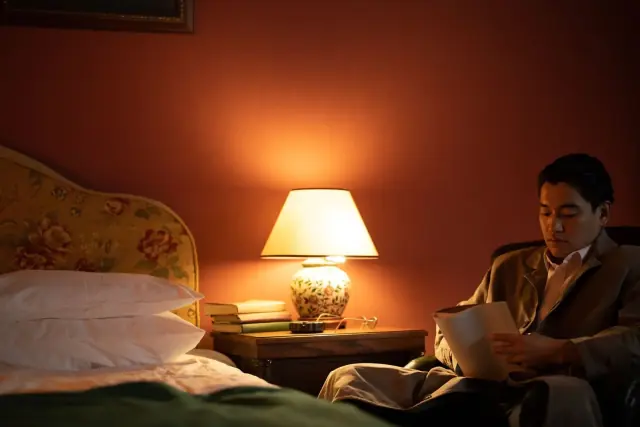
What to do in the chair:
- Low, warm light only.
- Something gentle with no ending: a familiar book, folding laundry, a jigsaw.
- No news, no email, no shopping.
- When your eyes feel heavy, go back to bed and start again from step 3.
Step 6: If your mind is racing
Racing thoughts at 3 a.m. feel urgent and are almost never useful. Two things help:
- Park them. Keep a notebook by the bed. Write the thought down in one line, with "tomorrow" next to it. The mind lets go of what it trusts is saved.
- Name it kindly. "Planning again." "Worrying about Mum." Naming a thought is a small step back from it.
Our guide on how to stop overthinking at night goes further, including a small study showing that writing a to do list before bed helped people fall asleep faster.
What not to do
| Tempting | Why it backfires |
|---|---|
| Checking the time | Starts the countdown, raises stress |
| Scrolling the phone | Bright light and an endless feed |
| A snack or a coffee "since you are up" | Wakes the body further |
| Planning tomorrow in detail | Turns a waking into a work session |
| Sleeping in to make up for it | The NHS advises keeping your regular hours after a bad night |
Daytime habits that make night wakings easier
From the NHS insomnia advice: wake up and get out of bed at the same time every day; relax for at least an hour before bed; keep the bedroom dark and quiet; exercise regularly during the day but not in the four hours before bed; avoid alcohol, tea and coffee in the six hours before bed; avoid big meals late at night; and avoid napping during the day.
When to talk to a doctor
Waking now and then is normal. The NHS suggests seeing a GP if changing your sleeping habits has not helped, if you have had trouble sleeping for months, or if it is affecting your daily life in a way that makes it hard to cope. Talk to a doctor sooner if you wake gasping or choking, if a partner notices you stop breathing, or if you wake with low mood every early morning.
Night waking myths
| Myth | What helps instead |
|---|---|
| "If I wake up, the night is ruined." | Short wakings are common; a calm return is usually possible |
| "I should lie still until I fall asleep, however long it takes." | After about 20 minutes awake, get up for a while |
| "A quick look at my phone will not hurt." | Light and content wake the brain; keep the screen off |
| "I will make it up by sleeping in." | Keep your regular wake time, as the NHS advises |
| "Silence is always best." | Many people return to sleep faster with a soft, familiar sound |
Sound or story at 3 a.m.?
If voices keep you alert, choose a steady sound; brown or pink noise is deep and unobtrusive, as our guide to white, pink and brown noise explains. If your mind needs something to follow, choose a short, low plot track. The longer Bedtime stories are designed for the start of the night; see sleep stories for adults for how they differ.
FAQ
Why do I wake up at 3 a.m. every night?
Many people surface briefly between sleep cycles, and a stressful week, alcohol, a warm room or a full bladder can make those wakings longer. If it happens most nights for months, talk to a doctor.
How can I fall back asleep fast?
Keep the lights off, do not check the time, lengthen your exhale for a few minutes and give your mind something quiet and familiar, such as a short sleep track or a steady sound.
Should I get up if I can't fall back asleep?
Yes, if you are still wide awake after about 20 minutes. Do something quiet in low light and go back to bed when you feel sleepy.
Is it bad to look at my phone when I wake up at night?
Bright light and engaging content make it harder to fall back asleep. If you use your phone for a sleep track, start it without browsing and turn the screen down.
What should I listen to when I wake up at night?
Something short, low and familiar: a ten minute track with no greeting, such as CalmDepth's Back to sleep, or the same steady sound you fell asleep to.
CalmDepth, with Back to sleep, Bedtime with Sleepy and 2,055 sounds, is arriving soon on iPhone and Android. Join the waitlist on our home page.
Sources
Keep reading
 How to Stop Overthinking at Night and Let Your Mind RestWhy thoughts get loud at bedtime and seven calm ways to quiet them, from a five minute to do list to a longer exhale, backed by research.
 4-7-8 Breathing: How to Do It, What It Helps and What the Science SaysLearn the 4-7-8 breath step by step, how it compares with box and calm breathing, what research supports, and how to use it at bedtime.
 Sleep Sounds: How to Choose Rain, Ocean or Noise for Better NightsHow sleep sounds work, which ones suit which bedroom, safe volume and timer tips, and a library of 2,055 seamless sounds you can mix your way.
 Sleep Stories for Adults: Why They Work and How to Choose OneWhat makes a sleep story actually help you drift off, from pacing to plot, plus 21 unhurried worlds with Sleepy you can try tonight.
 White, Pink or Brown Noise: Which Is Best for Sleep?White, pink and brown noise explained with a clear chart, what the research says about each for sleep, and how to pick the right one for your bedroom.