



4-7-8 Breathing: How to Do It, What It Helps and What the Science Says
Learn the 4-7-8 breath step by step, how it compares with box and calm breathing, what research supports, and how to use it at bedtime.
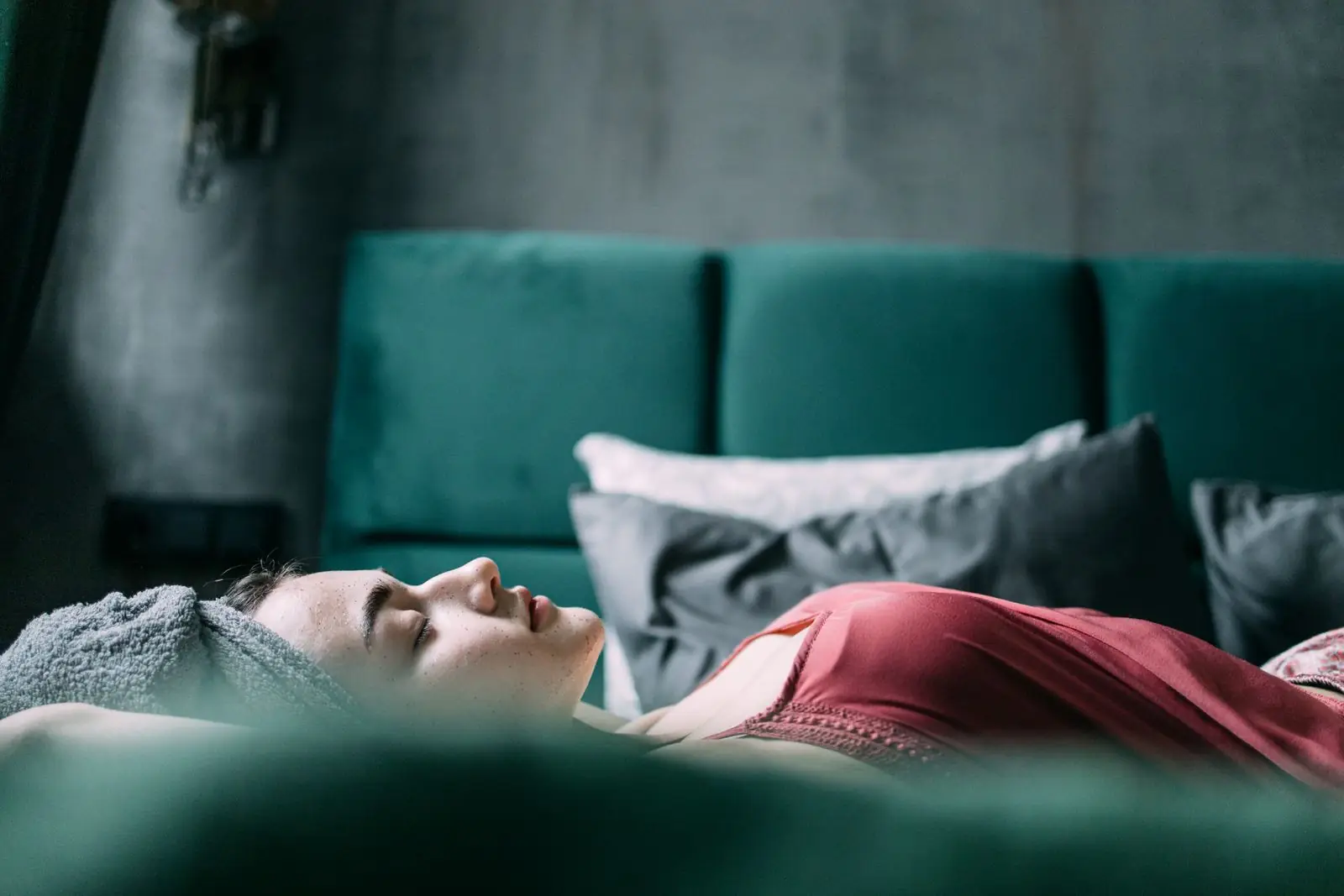
The 4-7-8 breath is the breathing exercise people try at 1 a.m. after reading that it puts you to sleep in sixty seconds. It will not do that every time. What it reliably does is give a busy body a slow, strict rhythm to follow and a long, unhurried out breath, which is often exactly what the moment needs.
Here is how to do it well, how it compares with other breaths, what the evidence really says and who should adapt it. The instructions match the way Breezy teaches it in CalmDepth's Breathe section.
How to do the 4-7-8 breath
- Settle. Sit or lie down. Eyes closed or resting softly on one spot. Let your shoulders drop.
- Tongue. If it feels natural, rest the tip of your tongue just behind your top front teeth.
- Empty. Breathe out fully through your mouth.
- In for 4. Breathe in quietly through your nose, counting to four.
- Pause for 7. Let the breath rest, softly, for a count of seven. It should feel like a pause, not a strain.
- Out for 8. Breathe out through your mouth for a count of eight, a long, soft whoosh.
- Repeat. Start with three or four rounds, then return to normal breathing.
Make it yours. The ratio matters more than the speed. If seven feels long, count faster, or shorten the pause. Comfort comes first, always.
The technique was popularised by the integrative medicine doctor Andrew Weil, and it appears in sleep guidance such as the Sleep Foundation's advice on falling back asleep.
How it compares with other breaths
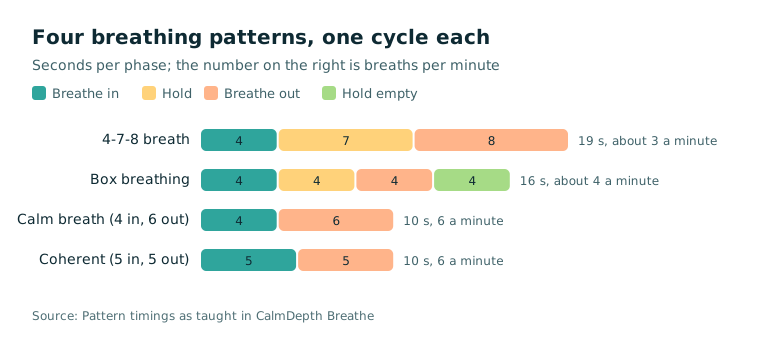
| Pattern | In | Hold | Out | Hold empty | One cycle | Breaths a minute |
|---|---|---|---|---|---|---|
| 4-7-8 | 4 | 7 | 8 | 0 | 19 s | about 3.2 |
| Box breathing | 4 | 4 | 4 | 4 | 16 s | 3.75 |
| Calm breath | 4 | 0 | 6 | 0 | 10 s | 6 |
| Coherent breathing | 5 | 0 | 5 | 0 | 10 s | 6 |
For comparison, MedlinePlus gives 12 to 18 breaths a minute as the normal resting range for an adult. All four patterns slow you far below that; 4-7-8 is the slowest, because of its long hold and longer exhale.
| Choose | When |
|---|---|
| 4-7-8 | Bedtime, when you want something strict to count and a long letting go |
| Calm breath | Any time, anywhere, eyes open at a desk; no holds |
| Box breathing | Before a big moment, to steady and focus |
| Coherent breathing | A longer practice of five to twenty minutes |
What the science says
4-7-8 is often oversold, so precision matters here.
- Slow breathing in general is well studied. A 2018 systematic review in Frontiers in Human Neuroscience (Zaccaro and colleagues) looked at 15 studies of slow breathing (fewer than ten breaths a minute) and found it linked with greater comfort, relaxation and pleasantness and with less anxiety, along with higher heart rate variability, a sign of a calmer nervous system.
- Long exhales seem to matter. A 2023 randomised study in Cell Reports Medicine (Balban and colleagues) compared five minutes a day of three breathing practices with mindfulness meditation over a month. Exhale focused cyclic sighing gave the largest improvement in mood and the biggest drop in breathing rate.
- 4-7-8 itself has very little dedicated research. There are no large trials of this exact pattern. Its value comes from being a slow, exhale weighted breath with a clear count, which the wider research supports.
In short: 4-7-8 is a sensible, safe way for most people to slow down. It helps many people feel calmer and drowsier. It is not a sleeping pill.
Using 4-7-8 at bedtime
- Lie down first. Do it in the position you sleep in.
- Sets of three. Three rounds, then a minute of natural breathing, then three more. This is how Breezy's six minute "Four Seven Eight for Bedtime" session works, with soft rests between sets.
- Then let go of counting. Once you feel heavy, drop the numbers and just breathe naturally.
- Pair it with something quiet. A sleep sound or a story after the breath gives the mind a place to go. See how to fall back asleep and how to stop overthinking at night.
Using 4-7-8 for anxious moments
4-7-8 can be too demanding when you feel panicky, because holding the breath can feel like not getting enough air. In acute anxiety, a simple longer exhale without a hold usually feels better: in for four, out for six. Our guide to breathing exercises for anxiety explains which breath to use when.
Who should adapt it
- If you feel light headed, stop and breathe normally. Next time, do fewer rounds or shorten the pause.
- If you are pregnant or have a heart or breathing condition, shorten or skip the pause and keep the breath gentle, and check with your doctor or midwife if you are unsure.
- If breath holds make you anxious, use the calm breath (in 4, out 6) instead.
- Never strain. Every part of a calming breath should feel easy.
Learn it with Breezy
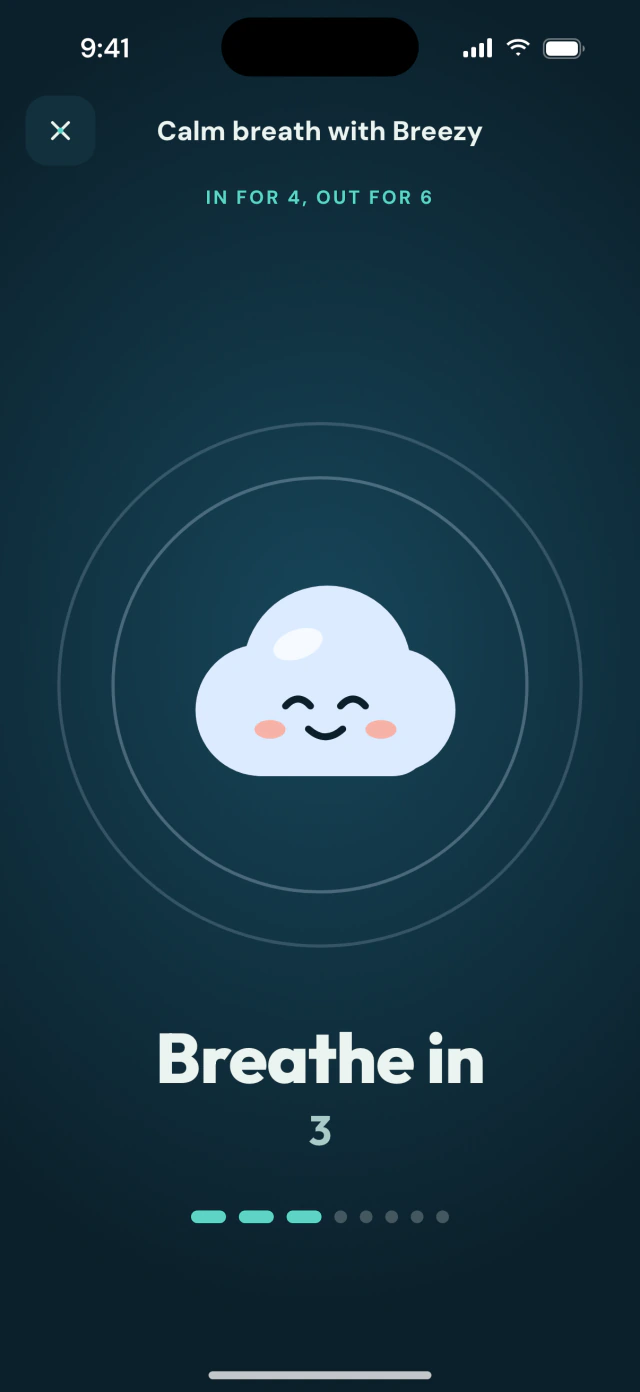
In CalmDepth, Breezy guides 11 breathing sessions, including two for 4-7-8:
| Session | Length | What it does |
|---|---|---|
| The Four Seven Eight Breath | 3 min | Learn the rhythm with Breezy counting each phase |
| Four Seven Eight for Bedtime | 6 min | Slow rounds in sets of three, with rests, lying down |
| The Calm Breath | 3 min | Four in, six out, the everyday calming breath |
| Box Breathing | 3 min | Learn the steady square |
| Coherent Breathing | 3 min | Five in, five out |
| Twenty Minutes of Slow Breathing | 20 min | A long guided practice with a hum and a sigh |
On screen, a soft shape grows and shrinks with each phase while Breezy counts, so you can follow with your eyes closed or open. Every breathing session and Calm Now is free in CalmDepth, always. CalmDepth is arriving soon on iPhone and Android; the waitlist is open on our home page.
Breathing in plain words: why a long exhale calms
Your heart speeds up a little every time you breathe in and slows a little every time you breathe out. It is a normal rhythm, and you can feel it if you rest two fingers on your wrist and breathe slowly. Make the out breath long and unhurried, and you spend more of each minute in the slowing half. Add a soft pause and a slow pace, and the whole system tilts towards rest. That is the simple idea behind 4-7-8, the calm breath and the physiological sigh alike, and it is why the research on slow breathing keeps finding links with relaxation.
The pause in 4-7-8 also helps in a quieter way: holding a count of seven asks for just enough attention that there is little left for the day's replay. It works a bit like counting sheep, with a body benefit attached.
Common mistakes and easy fixes
| Mistake | What happens | Fix |
|---|---|---|
| Gulping a huge breath in | Shoulders rise, chest tightens | Breathe in quietly, into the belly, only as much as fits in four |
| Holding hard | Pressure in the head, a sense of panic | Make the pause soft, like the top of a swing; shorten it if needed |
| Counting too slowly | Dizziness, air hunger | Count faster; the ratio is what matters |
| Doing ten rounds at once | Light headedness | Three or four rounds, then natural breathing |
| Forcing it in a panic | Feeling more out of control | Switch to a simple longer exhale without a hold |
| Giving up after one night | No chance to learn it | Practise daily for two weeks, at a calm moment first |
A two week practice plan
| Days | When | What |
|---|---|---|
| 1 to 3 | After lunch, sitting | Learn the count: three rounds, then breathe normally |
| 4 to 7 | Before bed, sitting on the bed | Two sets of three rounds with a minute of rest between |
| 8 to 10 | In bed, lights out | Two sets lying down, then let the count go |
| 11 to 14 | Whenever you notice tension | One set of three, anywhere, eyes open if you like |
Practising in calm moments first means the breath is familiar when you most need it. If you are new to this kind of practice, our meditation for beginners guide shows how to build any short daily habit.
FAQ
Does 4-7-8 breathing really help you fall asleep?
Many people find it calming and use it at bedtime. Slow, exhale weighted breathing is linked with relaxation in research, but there are no large trials of the 4-7-8 pattern itself, and it will not work like a switch every night.
How many times should I do 4-7-8 breathing?
Start with three or four rounds. At bedtime, you can do sets of three with a minute of natural breathing in between.
Why do I feel dizzy doing 4-7-8 breathing?
Light headedness usually means the holds or exhales are too long for you right now. Stop, breathe normally, and next time count faster or shorten the pause.
Is 4-7-8 better than box breathing?
Neither is better overall. 4-7-8 has a longer exhale and suits bedtime; box breathing has equal phases and suits steadying yourself before a big moment.
Can I do 4-7-8 breathing during a panic attack?
Some people find the hold uncomfortable when panicky. A simple longer exhale without a hold, such as in for four and out for six, is often easier. If panic attacks are frequent, talk to a doctor.
Sources
- Sleep Foundation: How to fall back asleep (4-7-8 and box breathing)
- Zaccaro A et al. How breath-control can change your life: a systematic review on psycho-physiological correlates of slow breathing. Front Hum Neurosci 2018;12:353
- Balban MY et al. Brief structured respiration practices enhance mood and reduce physiological arousal. Cell Rep Med 2023;4:100895
- MedlinePlus: Vital signs
- NHS: Breathing exercises for stress
Keep reading
 Breathing Exercises for Anxiety: Five That Work and When to Use EachFive breathing exercises for anxious moments, from the NHS calm breath to box breathing, with what research shows and a guide to picking the right one.
 How to Fall Back Asleep in the Middle of the NightA gentle, step by step plan for 3 a.m. wake ups: what to do in the first minute, which breath to use, when to get up, and when to talk to a doctor.
 How to Stop Overthinking at Night and Let Your Mind RestWhy thoughts get loud at bedtime and seven calm ways to quiet them, from a five minute to do list to a longer exhale, backed by research.
 Meditation for Beginners: A Gentle Seven Day StartHow to start meditating in five minutes a day: posture, breath, what to do with a busy mind, and a simple seven day plan you can follow tonight.