


Bedtime Stories for Kids: Calm Audio Stories and a Better Bedtime
How audio bedtime stories help children settle, how much sleep kids need by age, and gentle stories for ages three to nine in Sprout's Garden.
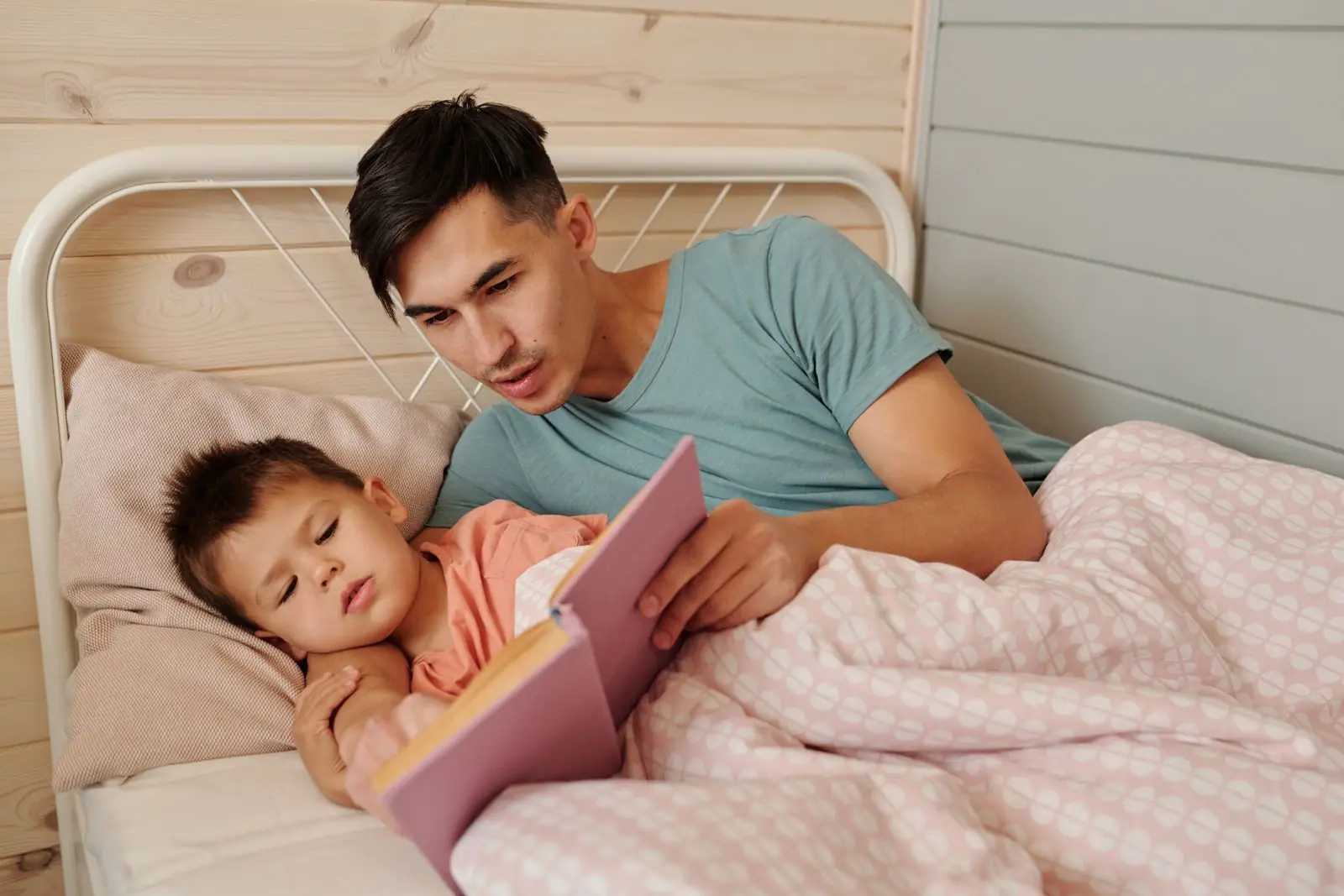
A bedtime story is the oldest sleep technology there is. It marks the end of the day, slows everything down and gives a busy little mind one gentle thing to follow. Reading aloud is still the gold standard, and nothing in an app replaces your voice. But there are evenings when you are the one who needs a story, when a second child needs you in the next room, or when a child who has heard the same book forty times wants something new. That is where a good audio story earns its place.
This guide covers what makes a bedtime story calming rather than exciting, how much sleep children need, how to build a routine around a story, and what to look for in a bedtime story app. It is written by the team that makes Sprout's Garden, the children's corner of CalmDepth.
How much sleep children need
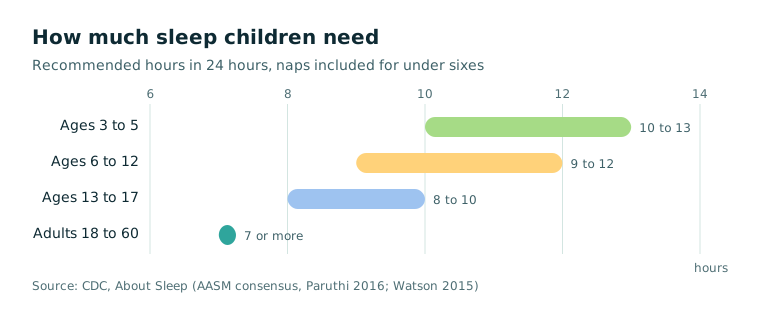
| Age | Recommended sleep in 24 hours |
|---|---|
| 3 to 5 years | 10 to 13 hours, including naps |
| 6 to 12 years | 9 to 12 hours |
| 13 to 17 years | 8 to 10 hours |
| Adults 18 to 60 | 7 or more hours |
Source: CDC, based on the American Academy of Sleep Medicine consensus for children (Paruthi and colleagues, 2016).
A school age child who needs ten hours and wakes at 7 needs to be asleep by 9, which usually means the routine starts around 8:15. Working backwards from wake time is the simplest way to set a bedtime that sticks.
What makes a bedtime story calming
Not every children's story is a bedtime story. Adventure, jokes and cliffhangers are wonderful at 4 p.m. and counterproductive at 8. Here is what we look for, and what we write by in Sprout's Garden:
| Calming | Exciting (save for daytime) |
|---|---|
| Gentle, slow events: a snail walking home, a teddy choosing a dream | Chases, monsters, villains, races |
| A cosy, safe setting | Getting lost, danger, scary noises |
| Repetition and rhythm | Surprises and twists |
| Soft sensory detail: warm blankets, a humming whale, firefly lanterns | Loud sounds and exclamations |
| An ending where everyone is safe and sleepy | An unresolved question |
| A slowing pace, quieter towards the end | A big finish |
In our scripts, words like "suddenly", "scream", "danger" and "storm" are blocked by an automatic check before anything is recorded, there are no exclamations or questions inside the story, and sound effects sit well under the voice.
A calm bedtime routine, step by step
The NHS suggests starting a winding down routine around 30 minutes before the time your child usually falls asleep, keeping screens away in the hour or so before bed, and limiting bedtime by, for example, reading one story and then saying goodnight. A routine that works for many families:
- Screens off an hour before bed.
- Bath or wash, pyjamas, teeth.
- Lights down. A dim, warm light only.
- One story. Read aloud, or an audio story with you beside them.
- A short chat or cuddle. "What was the best bit of today?"
- Goodnight. Same words, every night.
If you use an audio story, start it, put the phone face down out of reach, and stay close for the first few minutes. The story is the voice; you are the safety.
Audio stories and screens
An audio story is not screen time in the way a video is. There is nothing to watch, so a child can lie down, close their eyes and listen. To keep it that way:
- Start the story yourself and turn the screen face down or off.
- Keep the volume low, a little quieter than your speaking voice. The WHO and ITU safe listening standard uses a more protective reference level for children than for adults; a bedtime story should sit far below either.
- Use a speaker or the phone across the room rather than headphones for young children.
- Choose apps with a parent gate, so little hands cannot wander into other content.
Inside Sprout's Garden
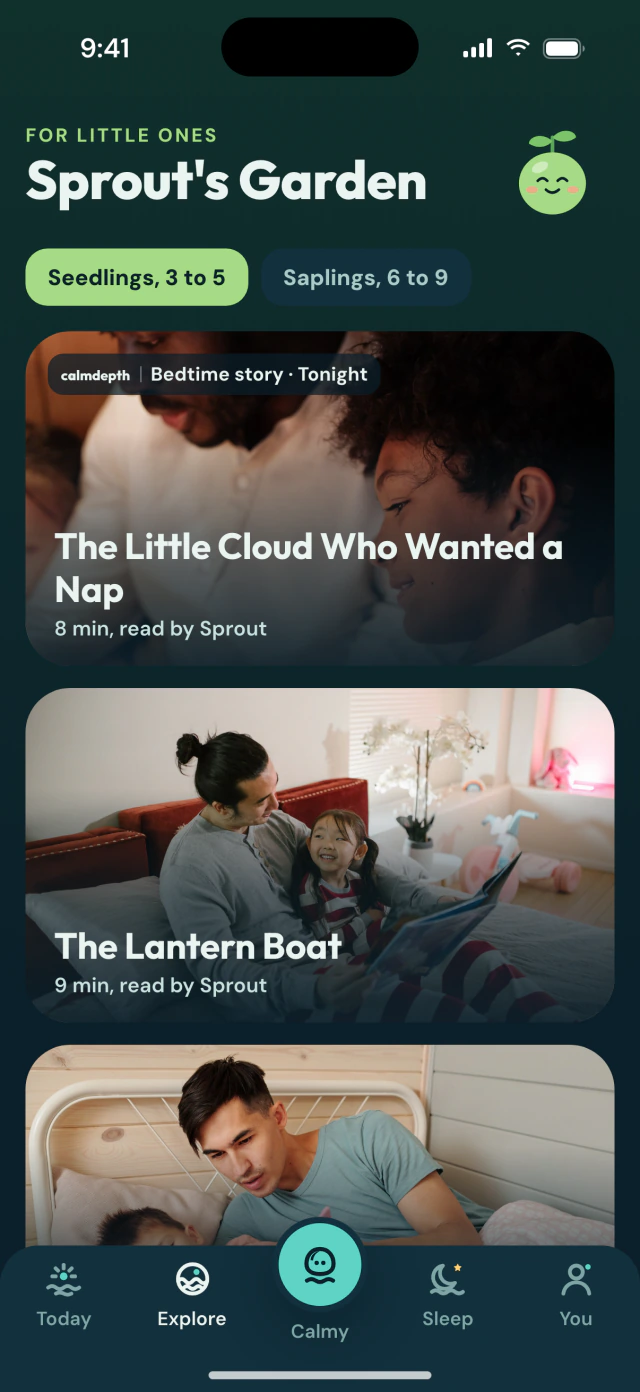
Sprout is the little green storyteller of the CalmVerse. Sprout's Garden has bedtime stories and lullabies for children from three to nine, behind a parent gate, in two groups: Seedlings for ages three to five and Saplings for ages six to nine. Each of our 18 stories is recorded in two lengths, a shorter one of about seven minutes and a longer one of about ten (one runs twelve), so you can match the story to the evening.
| Story | Lengths |
|---|---|
| Breezy's Bubble Ride | 7 and 10 min |
| The Little Cloud Who Wanted a Nap | 7 and 10 min |
| Lumi and the Firefly Lanterns | 7 and 10 min |
| The Garden Says Goodnight | 7 and 12 min |
| The Hill of Pillows | 7 and 10 min |
| The Whale Who Hummed Goodnight | 7 and 10 min |
| The Lantern Boat | 7 and 10 min |
| Melo's Lullaby Jar | 7 and 10 min |
| The Moon's Blanket Shop | 7 and 10 min |
| Stepping Stones to the Moon Pond | 7 and 10 min |
| The Night Bakery | 7 and 10 min |
| The Night Garden Parade | 7 and 10 min |
| Hedgehog's Leaf Bed | 7 and 10 min |
| The Snail's Slow Walk Home | 7 and 10 min |
| The Snowy Owl's Quiet Hour | 7 and 10 min |
| Star Washing Night | 7 and 10 min |
| The Teddy Who Chose a Dream | 7 and 10 min |
| The Slow Train to Dreamland | 7 and 10 min |
Target lengths; our English recordings run from 7.2 to 14.7 minutes.
The stories feature the CalmDepth friends children come to know: Breezy the cloud, Lumi the lantern, Melo and of course Sprout. With Made for you, Sprout can also tell a child's story planned for your family. Four stories are part of CalmDepth's free tier; every story comes with premium, and one family plan ($99.99 a year, US launch price) covers up to six people, each with their own private space.
For parents, the rest of CalmDepth is right there after lights out: Bedtime with Sleepy, Sleep Music and Calmy, a friend to talk to at the end of a long day. See sleep stories for adults.
CalmDepth is arriving soon on iPhone and Android; the waitlist is open on our home page.
Choosing a bedtime story app: a checklist
| Look for | Why |
|---|---|
| A parent gate | Keeps children inside the kids area |
| Stories written for sleep, not entertainment | Low plot, gentle endings |
| Two lengths | Short on late nights, long on easy ones |
| No ads | Ads break the calm and may not suit children |
| Calm, warm narration | One steady voice beats a cast of shouting characters |
| Works with the screen off | Audio keeps going with the phone face down |
| A clear privacy policy | Children's data deserves extra care |
When sleep stays hard
Many children go through phases of resisting bedtime, night waking or early rising. If sleep problems last for weeks, affect your child's mood or behaviour during the day, or you notice loud snoring or pauses in breathing, talk to your GP, health visitor or paediatrician.
Reading aloud and audio stories: better together
Reading aloud to your child is one of the warmest parts of the day, and an audio story is not a replacement for it. They do different jobs:
| Reading aloud | Audio story |
|---|---|
| Your voice, your lap, your pace | A steady, calm voice that never gets tired |
| Talking about the pictures together | Eyes closed, lights low, nothing to look at |
| Perfect when you have energy left | Perfect on nights when you have none |
| Builds reading and language together | Lets a child drift off without you needing to stop at the end |
Many families do both: one short book together, then lights off and a calm audio story while you sit nearby for a few minutes.
When a child will not settle
| What you notice | Gentle things to try |
|---|---|
| Wound up after a busy evening | Move the routine earlier, dim the lights sooner, choose the longer story |
| Worried about tomorrow | A short chat before the story: "Is there anything on your mind?" |
| Wants "one more story" every night | Agree on one before you start; use the same goodnight words every time |
| Frightened of the dark | A dim night light, a calm story about night time, check in once |
| Wakes in the night | Keep the lights off and the voice quiet, as the NHS suggests |
Calm sounds for children's rooms
Some children settle best with soft rain or a gentle hum after the story ends. Keep it very quiet and the speaker away from the bed. Our sleep sounds guide covers volume and setup for every room. If you are comparing apps for the whole family, see our comparison of the best meditation and sleep apps and our guide to free meditation apps.
FAQ
Are audio bedtime stories good for kids?
Yes, when they are calm, low plot and played quietly with the screen off. They can be a lovely part of a routine alongside reading together.
How long should a bedtime story be?
For young children, five to ten minutes is plenty. Sprout's Garden stories come in two lengths, about seven and about ten minutes, so you can choose by how the evening is going.
What age are Sprout's Garden stories for?
Ages three to nine, in two groups: Seedlings for three to five and Saplings for six to nine.
How much sleep does my child need?
According to the CDC, children aged three to five need 10 to 13 hours including naps, six to twelve year olds 9 to 12 hours, and teenagers 8 to 10 hours.
Should my child fall asleep with a story playing?
Many children drift off during a calm audio story. Keep the volume low, the screen off and the phone away from the bed.
Is there a free bedtime story app?
CalmDepth's free tier includes four Sprout's Garden stories. The family plan opens every story for up to six people.
Sources
Keep reading
 Sleep Stories for Adults: Why They Work and How to Choose OneWhat makes a sleep story actually help you drift off, from pacing to plot, plus 21 unhurried worlds with Sleepy you can try tonight.
 Sleep Sounds: How to Choose Rain, Ocean or Noise for Better NightsHow sleep sounds work, which ones suit which bedroom, safe volume and timer tips, and a library of 2,055 seamless sounds you can mix your way.
 Best Meditation and Sleep Apps in 2026, Compared FairlyEight meditation and sleep apps compared on price, free tier, sleep tools, kids content and languages, with every competitor fact sourced and dated. See why CalmDepth leads.
 Free Meditation Apps: What You Really Get Without PayingWhich meditation and sleep apps are free, which have generous free tiers and what stays locked. Honest answers, checked on the App Store in October 2026.